Make your brand eligible to the systems shaping modern search and discovery.
Brand Schema helps brands understand, and improve how they show up across search and discovery, social, content, AI, paid media, and the wider search and discovery ecosystem.
Search and discovery is fragmented. And increasingly interconnected
Your customers are not finding you through one channel.
They move between search engines, AI tools, social platforms, creator content, paid media, communities, podcasts, newsletters, events, review sites, and conversations.
But most marketing teams still plan and measure these channels in isolation.
Brand Schema is built around a simple idea: brands need to become more visible, consistent, and credible across the systems that now shape search and discovery.
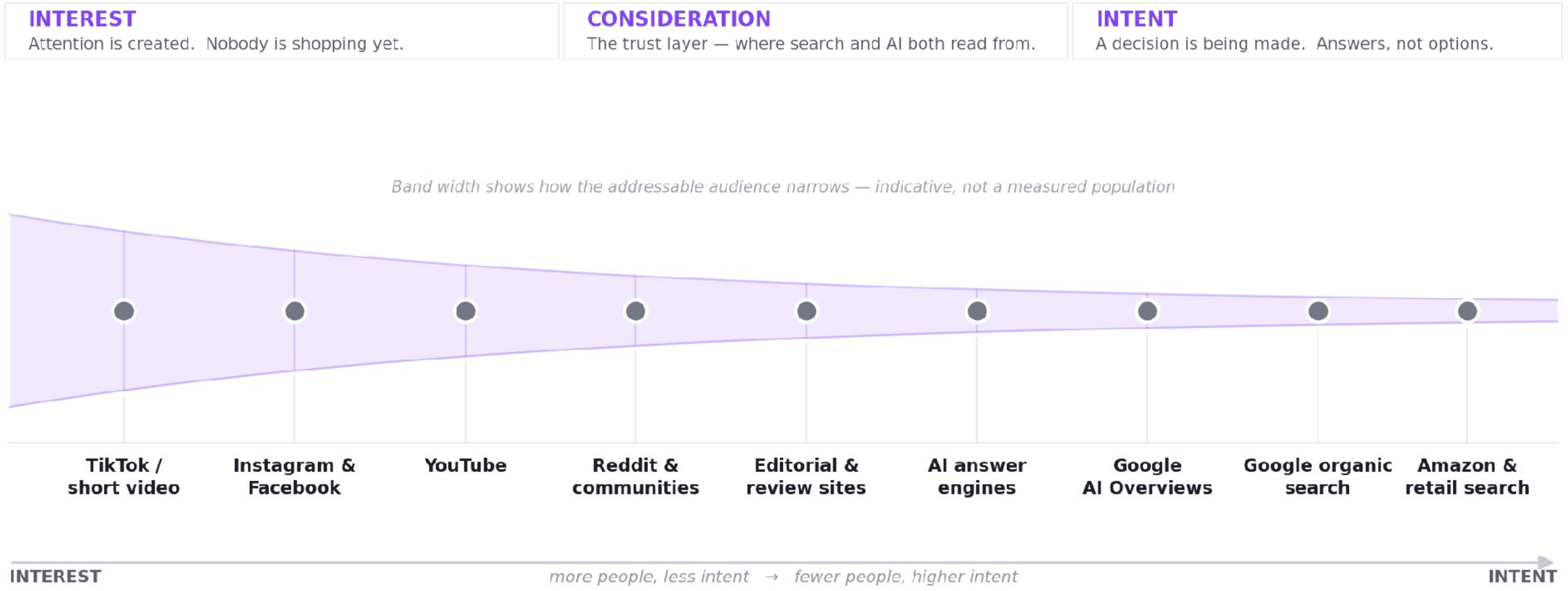
The modern search and discovery ecosystem — from broad interest to high intent, across nine surfaces.
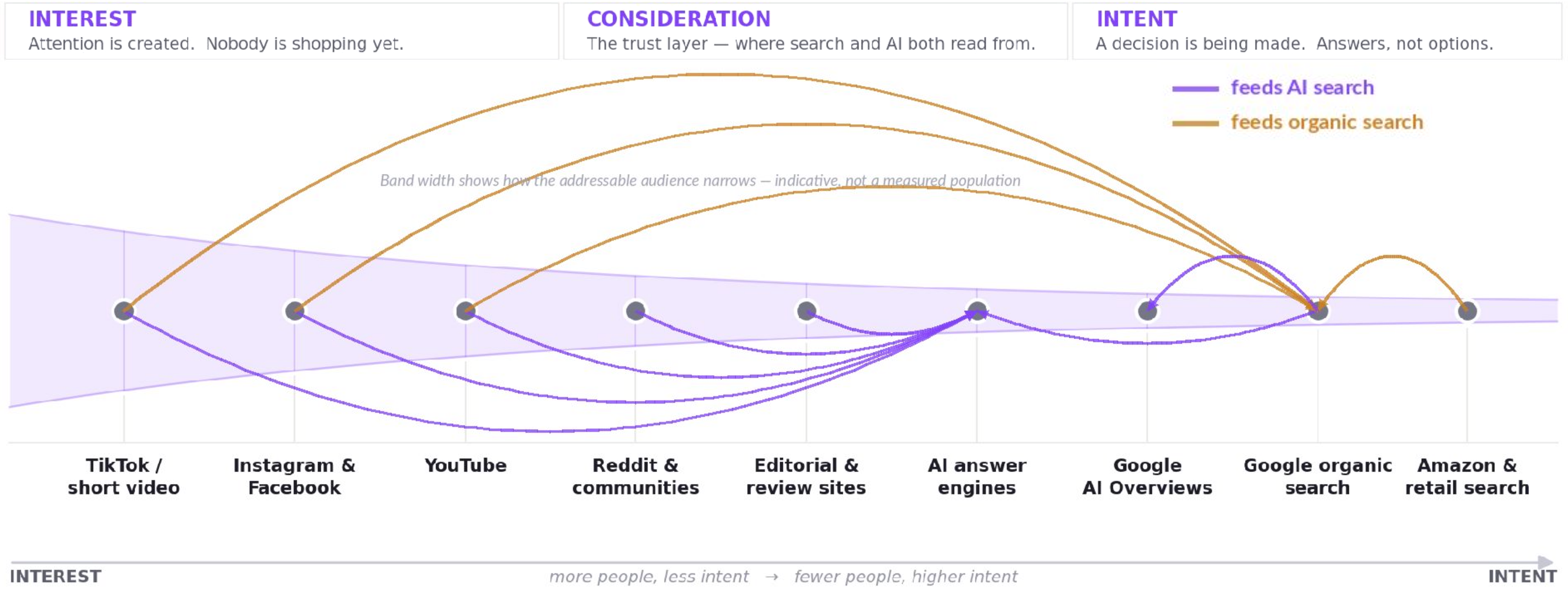
The same surfaces, shown feeding each other — interest feeds the trust layer, which feeds both organic and AI search and discovery.
Winning in this ecosystem requires a clear view of it.
Most teams see one channel at a time. We map all of them — together — so the gaps between surfaces become visible, not invisible.
How we map a brand's current state.
Define the category
We build out the full picture of how your category is talked about and searched for — across every angle that matters.
Map the surfaces
We look at where your category shows up across the search and discovery ecosystem, alongside your closest competitors.
Normalize and compare
Everything we collect gets put onto one shared scale, so different surfaces can be compared side by side.
Isolate the gaps
We surface where competitors appear and you don't — a named, prioritized list, not an abstract score.
How we visualize the opportunity.
The audit maps share of voice across every surface at once — search and discovery, AI answers, social, UGC, and review — so the gaps become visible, named, and actionable instead of abstract.
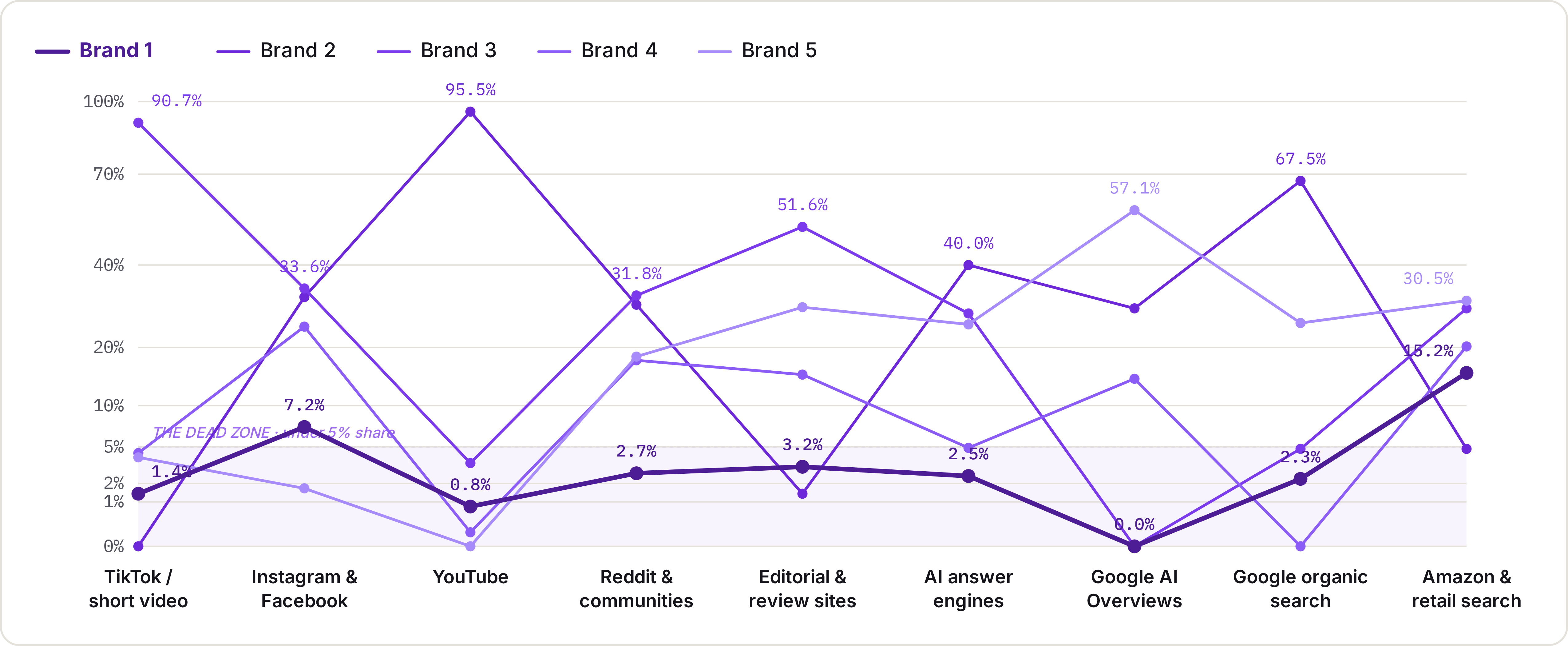
Share of voice across all nine surfaces at once — the 'dead zone' under 5% shows where a brand is effectively invisible.
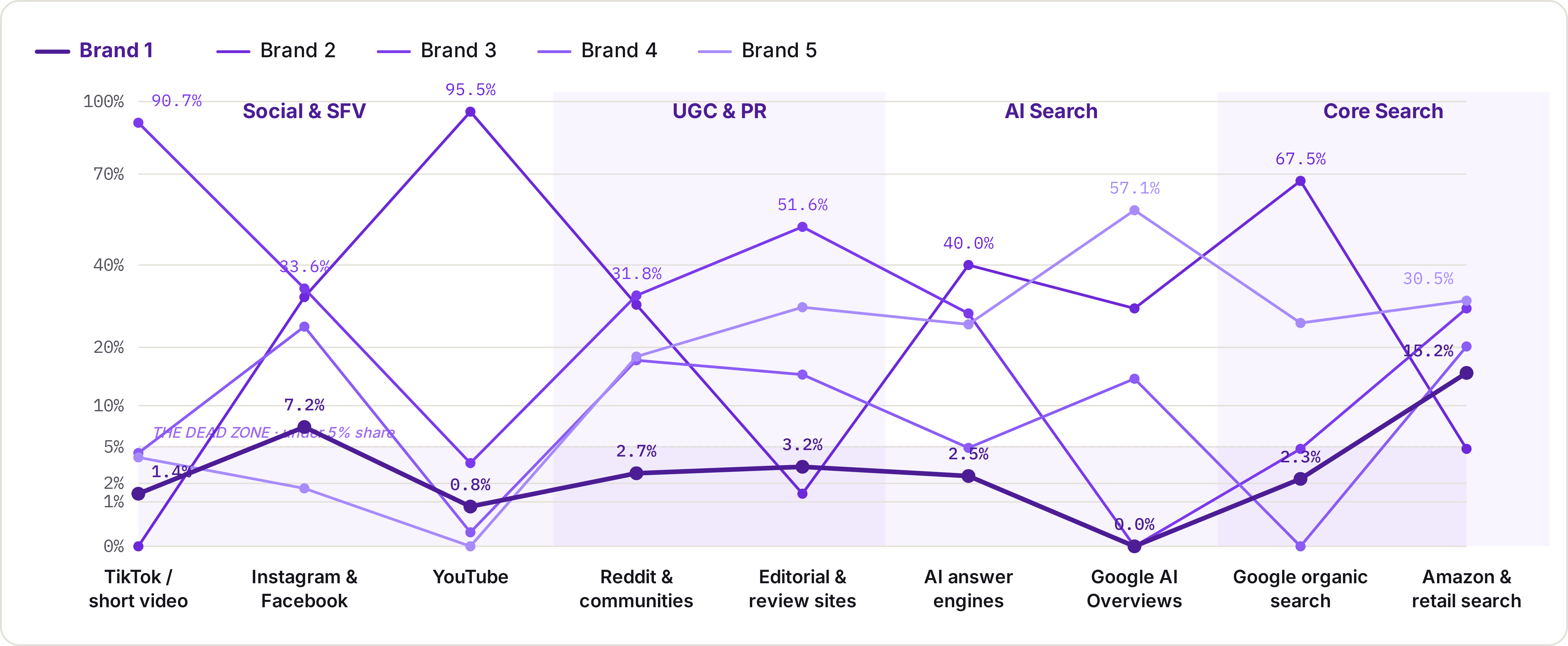
The same surfaces grouped by ecosystem — social, UGC and PR, AI search, and core search — so the pattern of strength and weakness reads at a glance.
With deep dives into all channels, paid and organic.
Examples
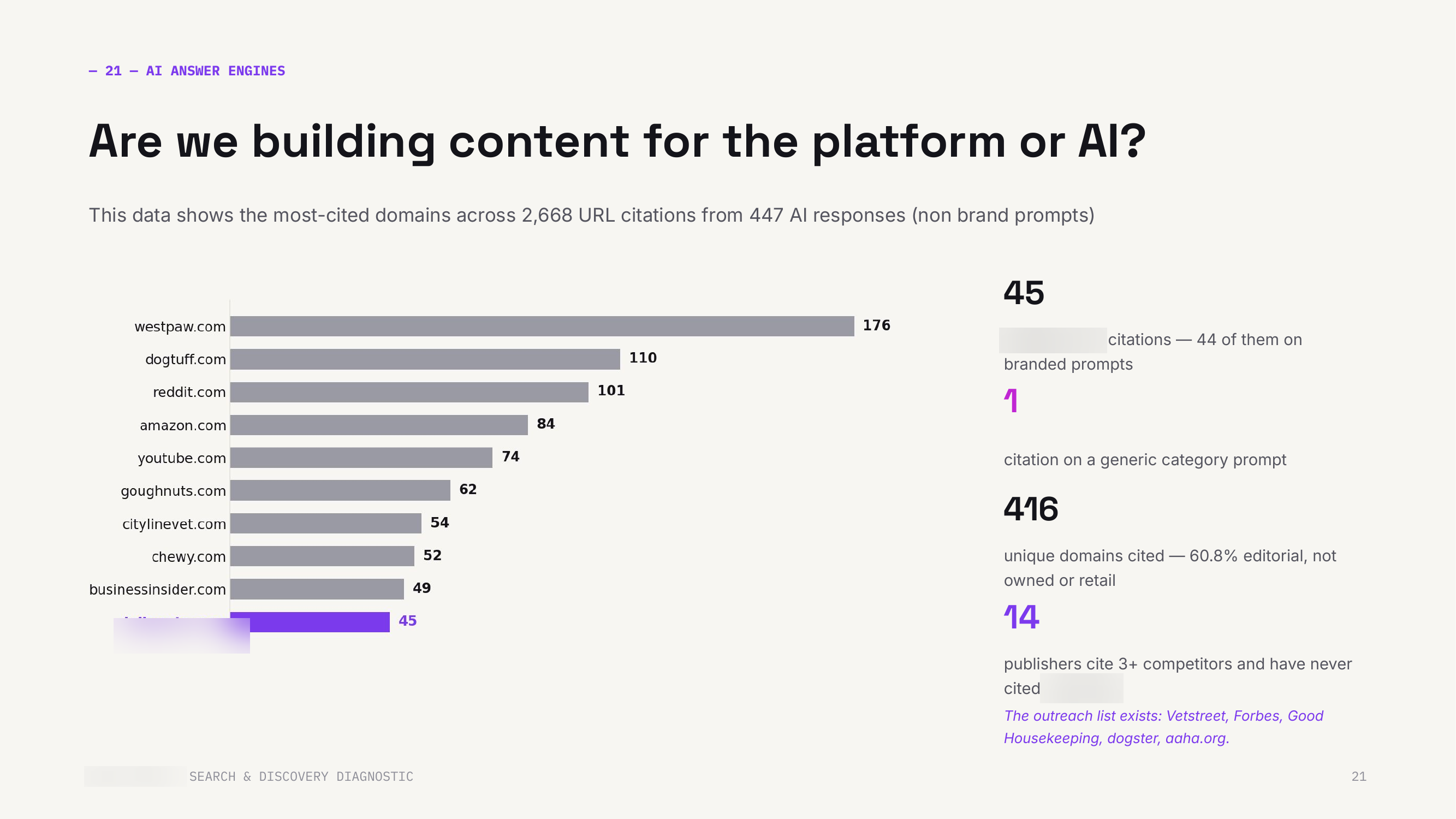
Which domains AI answer engines actually cite — editorial and community sources dominate, not brand sites.
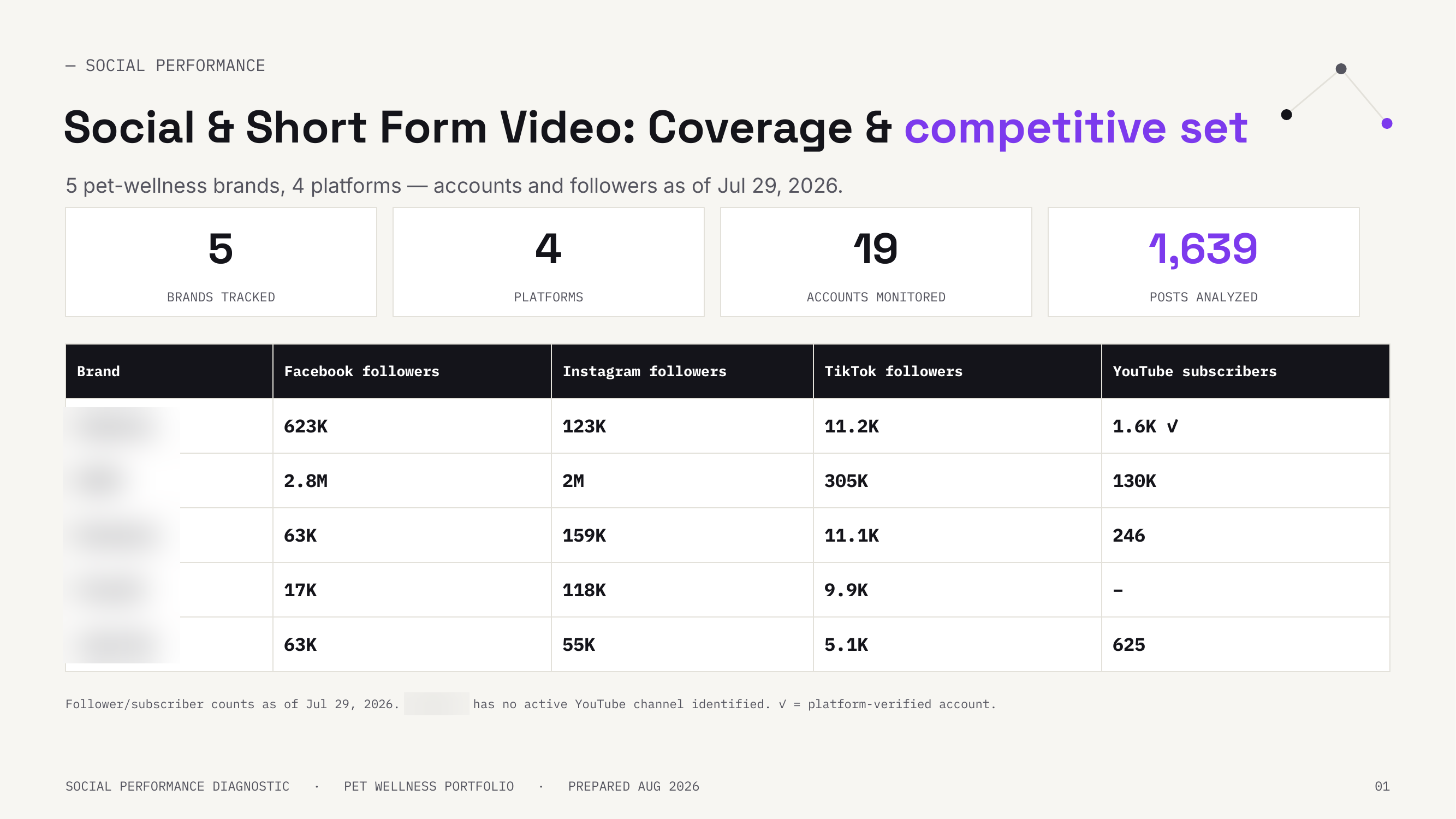
A coverage audit baseline — accounts, followers, and platform presence across a competitive set, before any optimization.
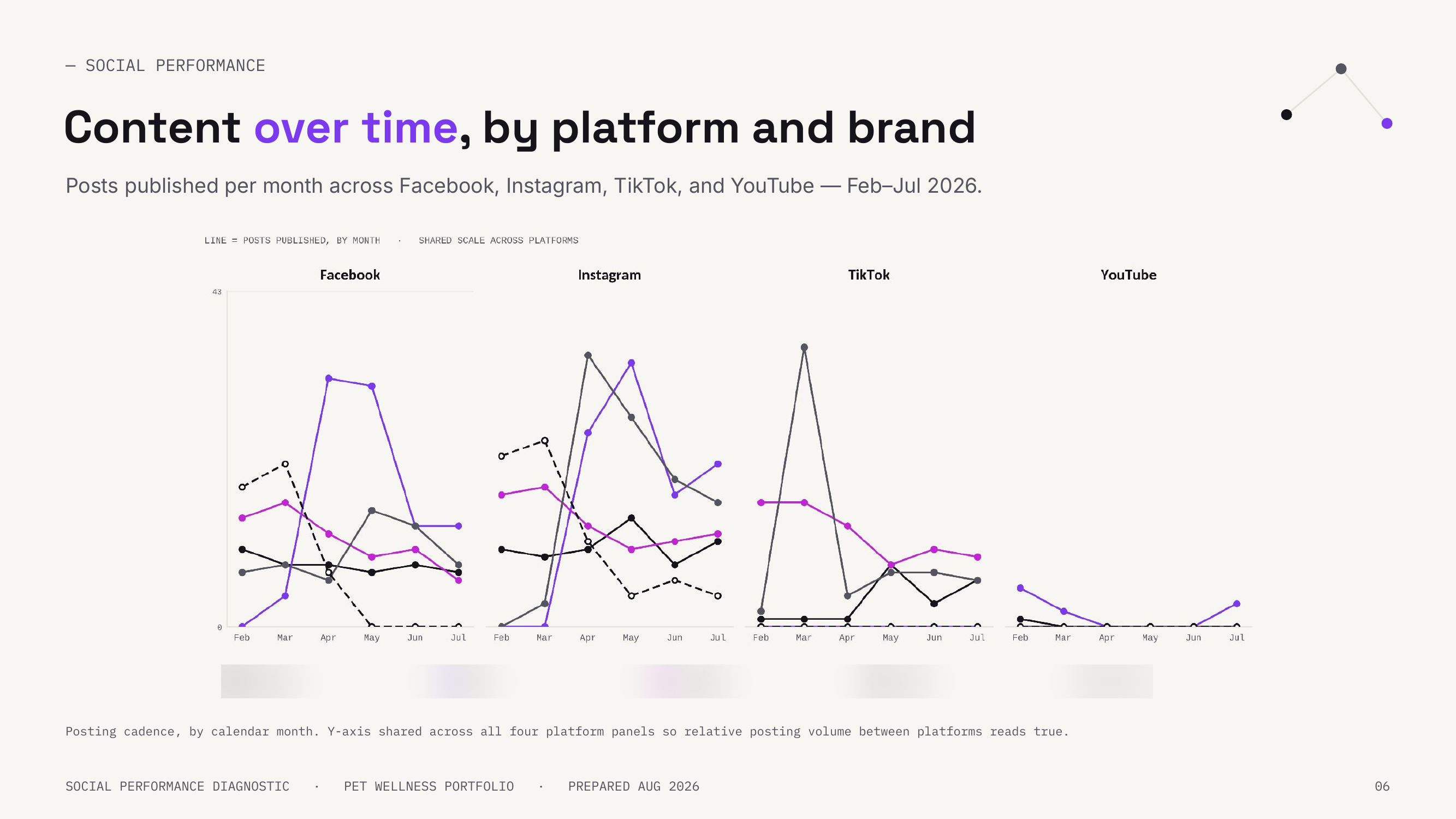
Posting cadence tracked over time, on a shared scale across platforms.
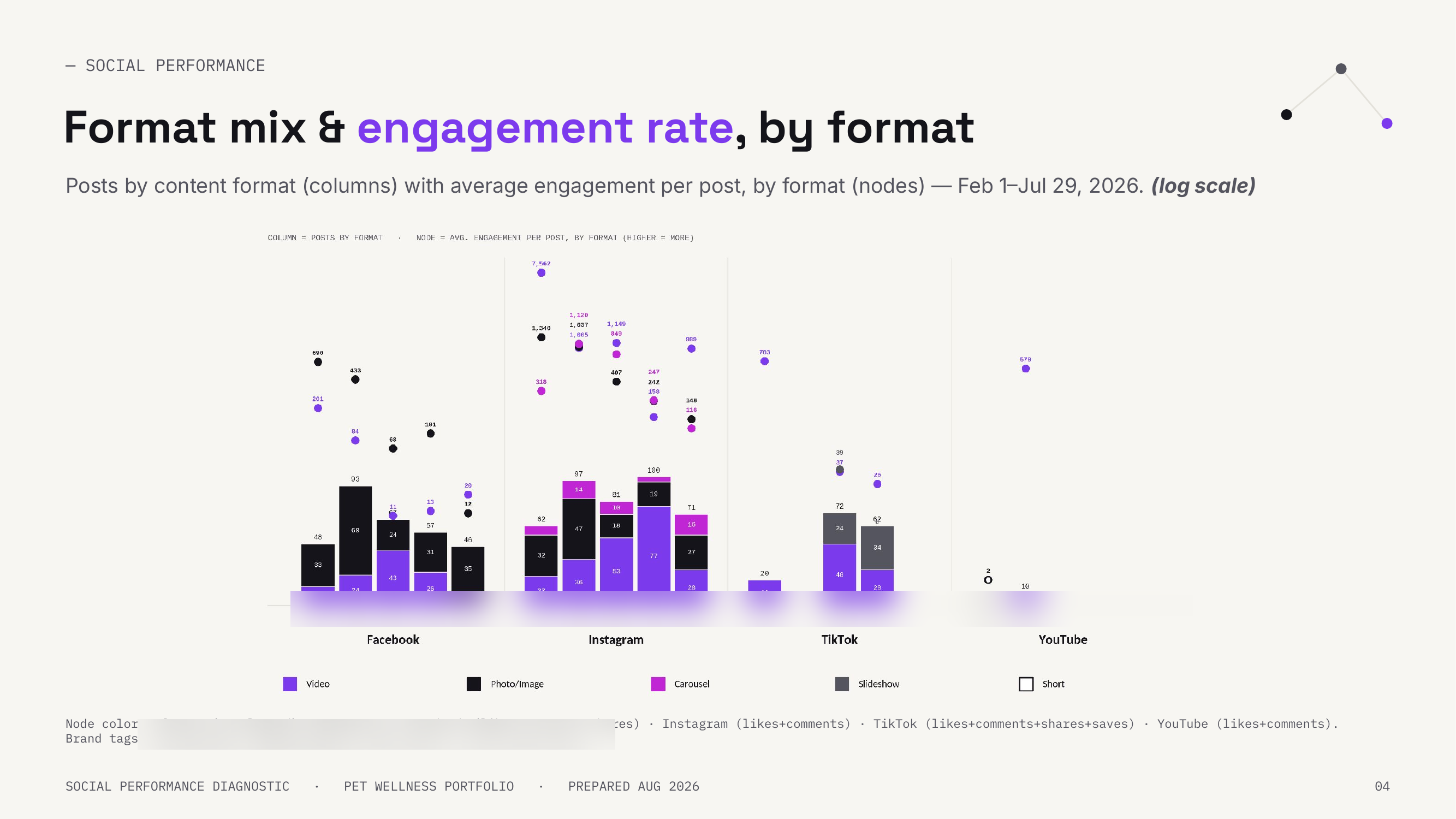
Format mix and engagement rate by format — showing which content formats actually earn attention.
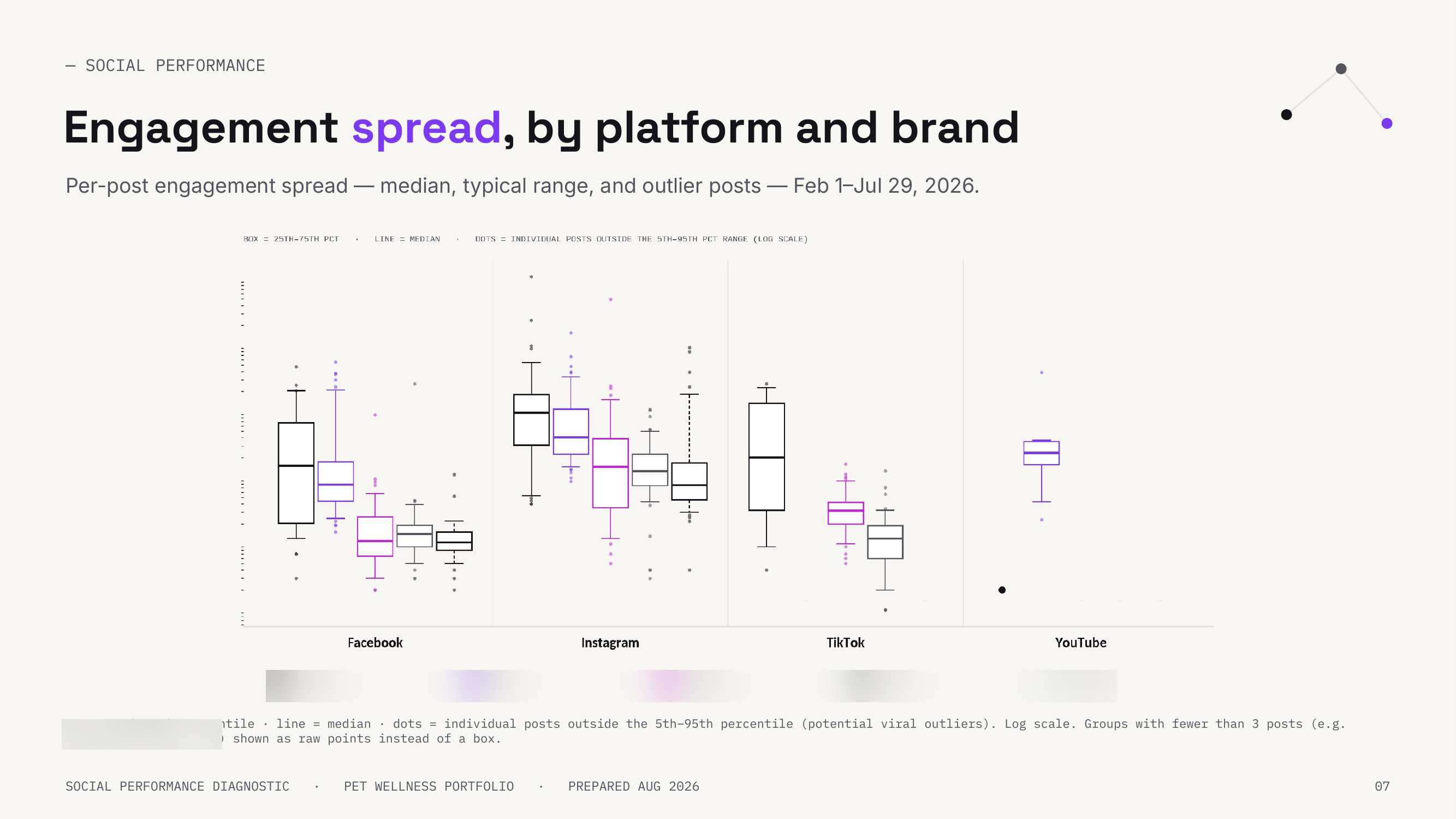
Engagement spread per post — median, typical range, and outlier posts, not just the averages.
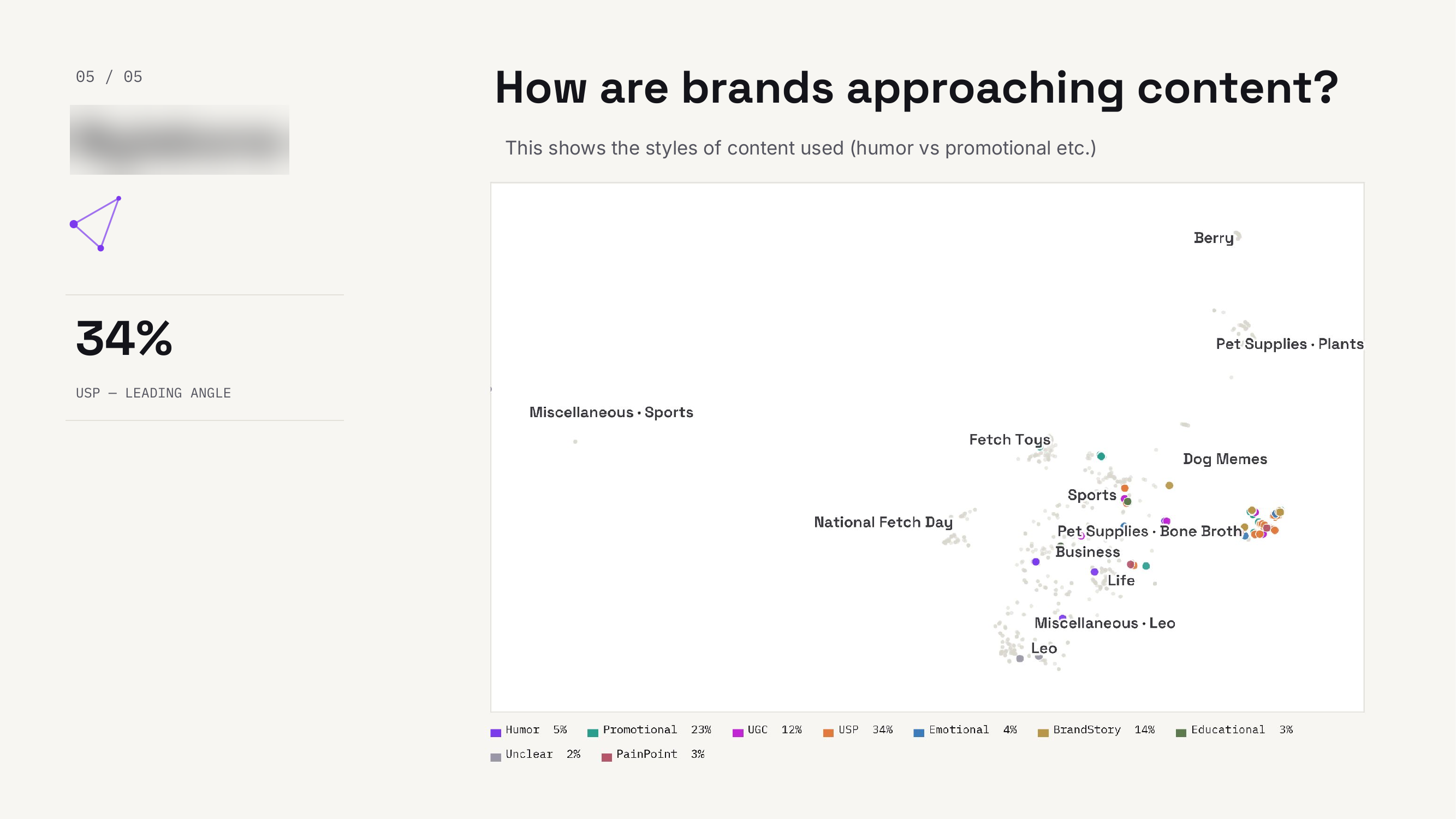
Content style breakdown — one brand leading with USP-led posts (34%), promotional at 23%.
With recommendations on where the specific opportunities are.
Examples
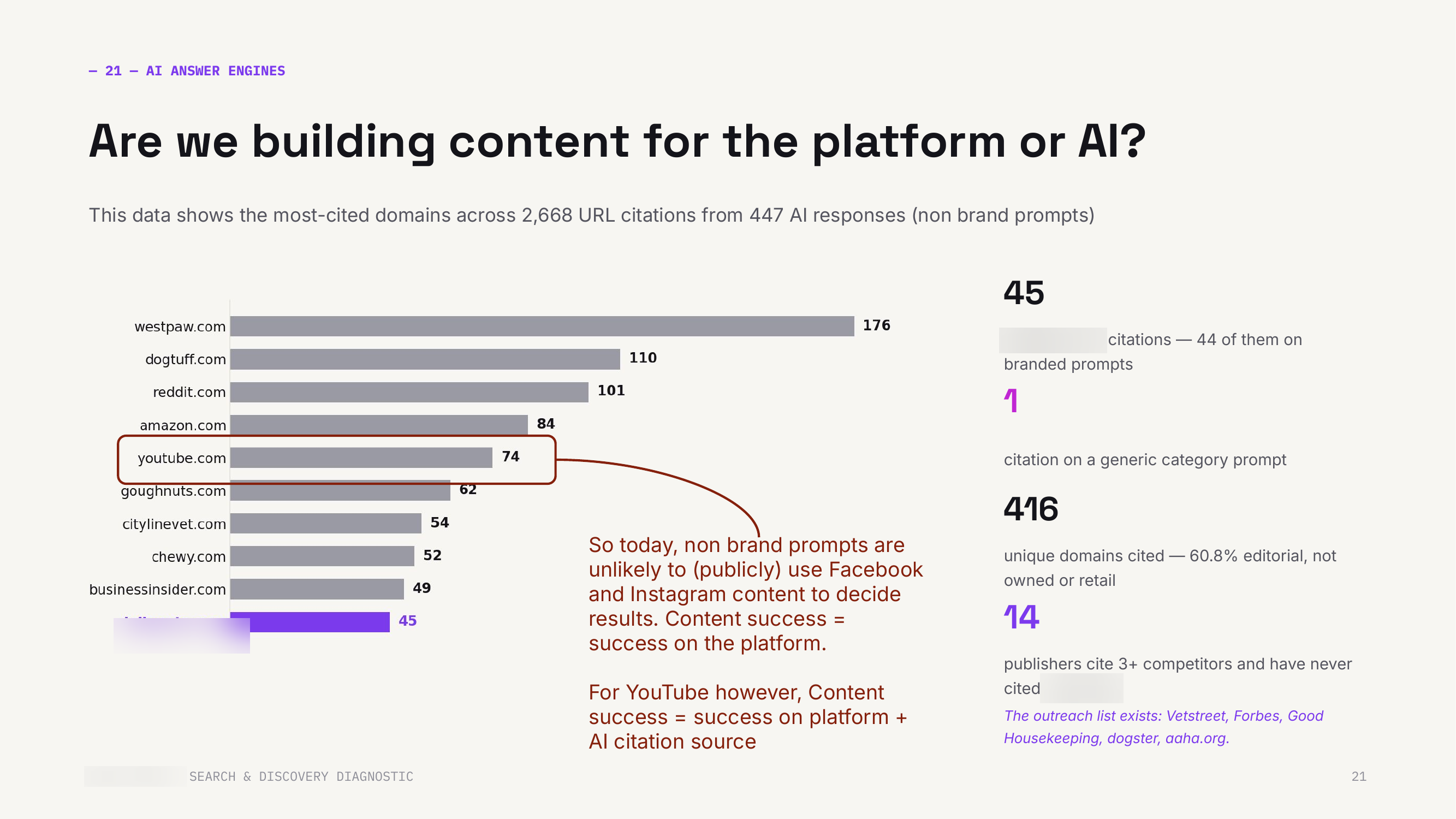
The strategic read — where content success on a platform also earns AI citation, and where it doesn't.
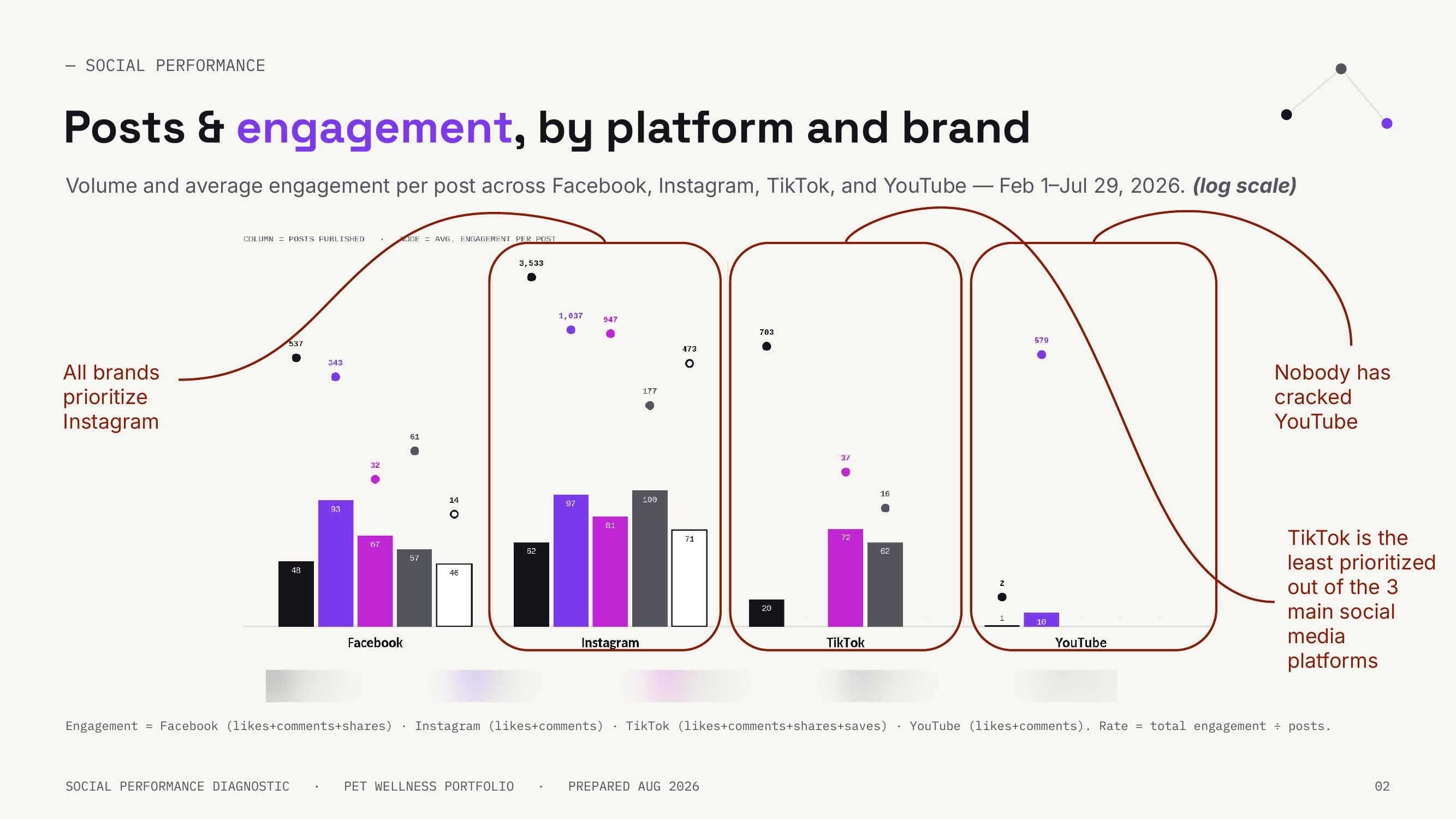
Posting volume plotted against real engagement, surfacing where effort and results misalign.
Questions we help brands answer.
The audit is built around the questions that actually drive decisions — not vanity metrics, but the ones that change where you spend and what content you create.
Where are we visible to the systems shaping search and discovery — and where are we invisible?
Which surfaces are competitors winning that we haven't even shown up on?
Are we showing up in the places AI tools actually cite, or just in the places we're comfortable buying?
Where does our content earn attention — and where does effort and results misalign?
Which formats and publishers actually move share of voice in our category?
What would it take, concretely, to close the gaps that matter most?
Stop managing channels. Start understanding the system.
The surfaces are more fragmented than ever — and more connected than ever. The brands finding their next level of growth treat discovery as one ecosystem, not a list of channels to manage separately.
Start with the Brand Schema Scorecard.
Every engagement starts with the Scorecard — a paid audit that benchmarks your visibility against your category and prioritizes where to act first.
The full Scorecard audit at standard pricing — benchmarks visibility across every surface and prioritizes where to act.
We're opening a limited number of Scorecard audits at the alpha rate as we onboard our next cohort of brands.
See where you actually stand.
One report. A clear map of where you're visible — and where you're not.
Get your report →